
Industrial Starch Modification Technology
Native starches may require improved functional properties when exposed to demanding processing conditions such as low pH, high mechanical shear, elevated temperatures, or freeze-thaw cycles.
Our modified starch processing solutions are designed to tailor the functional properties of native starch through controlled physical, chemical, or enzymatic treatments, providing improved viscosity control, texture stability, thermal resistance, water retention, and processing performance according to specific application requirements.
Turnkey Engineering & Reaction Automation
We design and integrate automated starch modification systems with process controls for key parameters including temperature, pH, reagent dosing, mixing, and reaction time.
Depending on the modification technology and product requirements, the process may incorporate controlled reaction systems, washing and purification units, dewatering equipment, drying systems, and automated material handling. PLC-based process control and monitoring systems can be integrated to support consistent operating conditions, process traceability, and product quality.
Plant Infrastructure & Process Equipment
Our modified starch processing plants can incorporate:
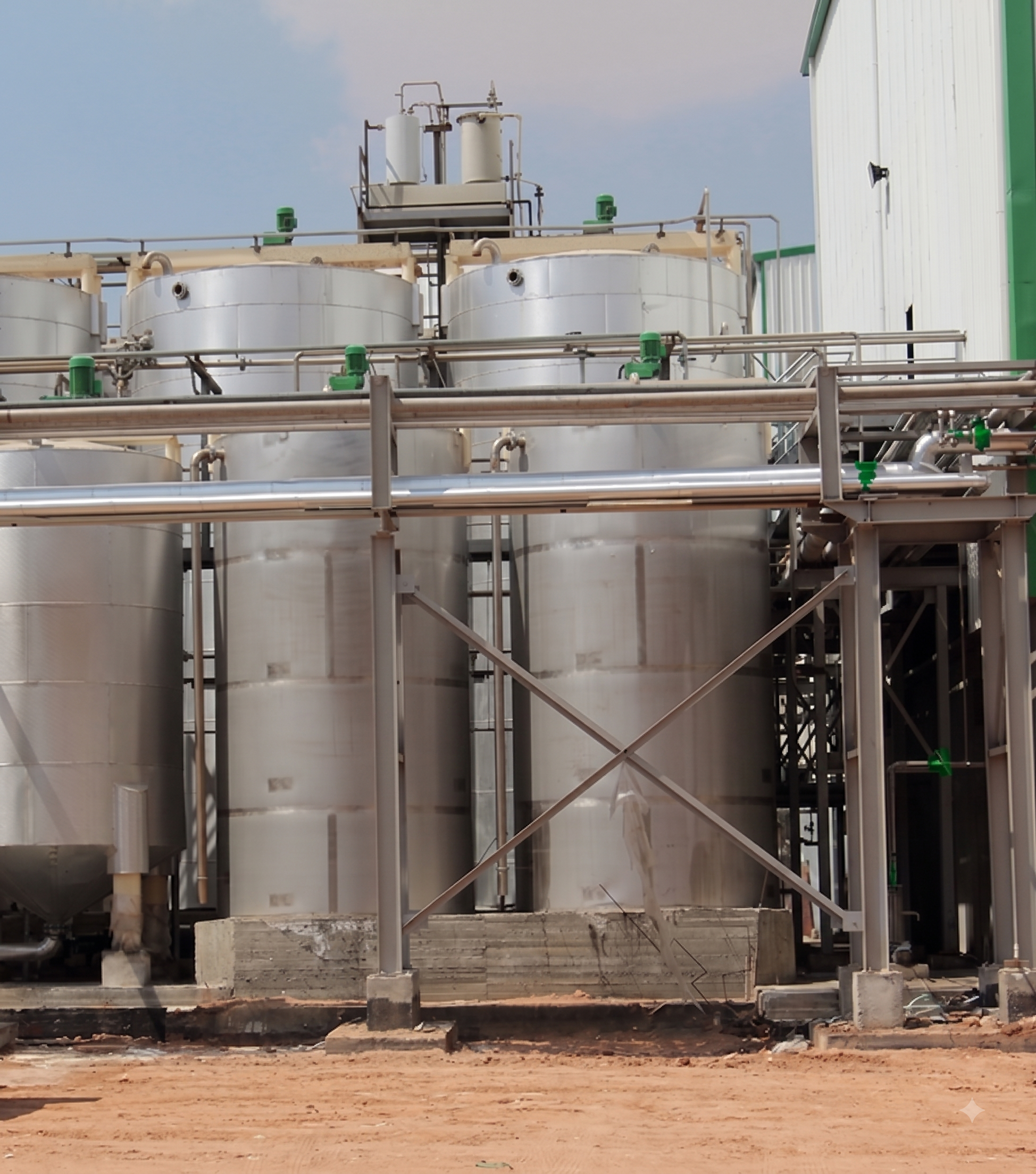
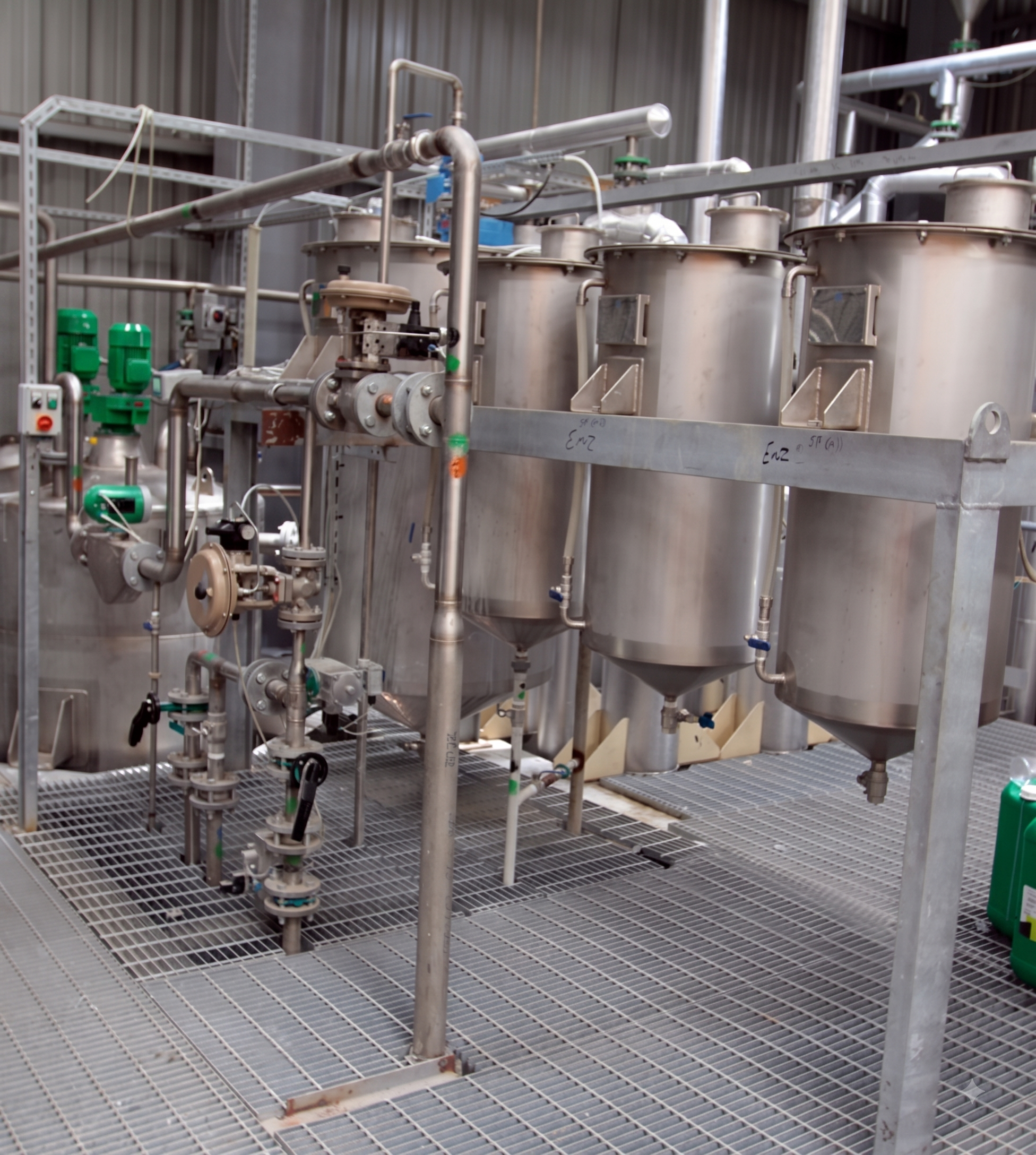
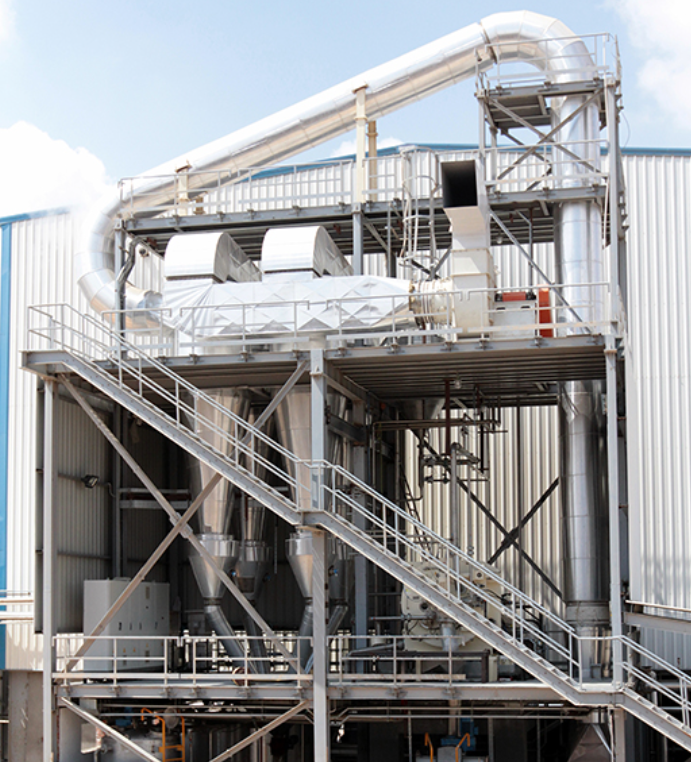
- Stainless-steel slurry preparation and reaction tanks
- Automated chemical dosing systems
- Mixing and agitation systems
- pH and temperature control systems
- Washing and purification systems
- Hydrocyclone separation systems
- Centrifugal dewatering equipment
- Flash drying systems
- Pneumatic conveying systems
- Storage silos and automated packaging systems
- PLC / SCADA process control systems
Modified Starch Production Flowchart
The modification and refining process is configured according to the selected starch type and required product specifications:
Slurry Preparation
Native starch is dispersed in purified water in stainless-steel mixing tanks under controlled concentration, agitation, and temperature conditions to produce a uniform starch slurry.
Controlled Modification
Depending on the required product grade, physical, chemical, or enzymatic modification is carried out under controlled process conditions (esterification, etherification, cross-linking, or oxidation).
Reaction Control & Neutralization
Reaction conditions are monitored and controlled. Where applicable, the slurry is neutralized by controlled pH adjustment using automated dosing systems.
Washing & Purification
The modified starch slurry undergoes controlled washing and purification stages to reduce soluble salts, residual reagents, and other process impurities.
Dewatering
The purified starch slurry is mechanically dewatered using suitable separation equipment, such as peeler centrifuges or vacuum filtration systems.
Drying & Conveying
The dewatered starch is dried under controlled conditions using flash drying technology and conveyed pneumatically to storage silos or packaging systems.
Modification Capabilities & Product Types
- Cross-Linked Starches: Designed to provide improved resistance to heat, acid, and mechanical shear in demanding food-processing applications such as sauces, soups, and processed foods.
- Oxidized Starches: Used where controlled viscosity, film-forming properties, and binding performance are required, including selected paper and textile applications.
- Thin-Boiling Starches: Modified to provide reduced hot-paste viscosity while maintaining suitable solids content and functional properties for selected industrial applications.
- Pre-Gelatinized Starches: Designed to swell and provide thickening or binding properties in cold-water applications without conventional cooking.
- Esterified & Etherified Starches: Used to modify properties such as paste stability, retrogradation behavior, freeze-thaw performance, and texture depending on the specific modification.
Key Industry Applications
-
Food & Beverage Processing:
Modified starches can be used as thickeners, stabilizers, binders, and texture-modifying ingredients in products such as sauces, soups, bakery fillings, dairy products, desserts, and processed foods.
-
Paper & Corrugated Industry:
Used as binders and sizing agents in paper manufacturing, corrugated board production, surface treatment, and selected coating applications.
-
Textile Industry:
Used as sizing agents to improve yarn strength, abrasion resistance, and processing performance during weaving.
-
Construction & Adhesives:
Selected modified starch grades can be used in adhesive formulations and construction products where water retention, viscosity control, and bonding properties are required.
Technical Specifications
| Parameter | Typical Specification |
|---|---|
| Appearance | Fine White to Off-White Powder |
| Moisture Content | Typically ≤ 12–14% |
| pH Value | Product-specific |
| Purity | Product-specific |
| Viscosity | Product-specific |
| Degree of Substitution (DS) | Controlled according to modification grade |
Packaging & Supply Options
- 25 kg Multi-Wall Paper Bags with PE Inner Liner
- 850 kg / 1000 kg Jumbo Big Bags (FIBC)
- Bulk Silo / Tanker Deliveries