
Demineralization is an essential refining step for removing dissolved salts, mineral ash, organic acids, and other ionic impurities that can affect product quality and downstream processing.
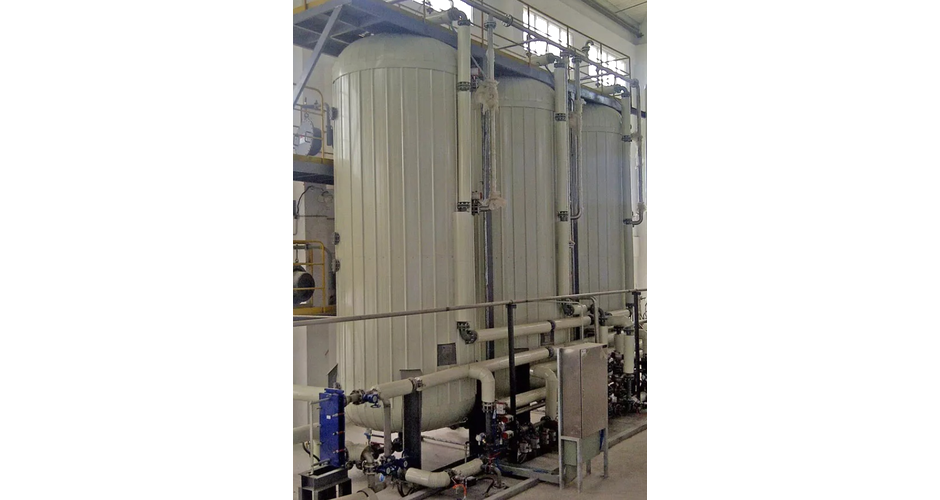
Our integrated demineralization systems combine multi-column ion exchange, automated regeneration, filtration, and effluent management for reliable and efficient operation.
Ion Exchange Principles
Industrial demineralization uses ion exchange resins to remove dissolved cations and anions from process streams.
The combination of cation and anion exchange provides effective removal of dissolved ionic contaminants and reduces the conductivity of the treated stream.
Turnkey Process Configurations
-
Feed Conditioning & Filtration
Temperature control and pre-filtration to ensure stable resin performance and protect the ion exchange system.
-
Multi-Column Operation
Lead-lag and multi-train configurations provide continuous operation while individual columns undergo regeneration.
-
Regeneration Systems
Automated regeneration using appropriate acid and caustic solutions, optimized to reduce chemical and rinse-water consumption.
-
Sweetening-On & Sweetening-Off
Controlled water displacement and product recovery cycles help minimize dilution and product losses.
-
Effluent Management
Collection and neutralization of regeneration effluents can be integrated into the overall plant design.
Engineering & Automation
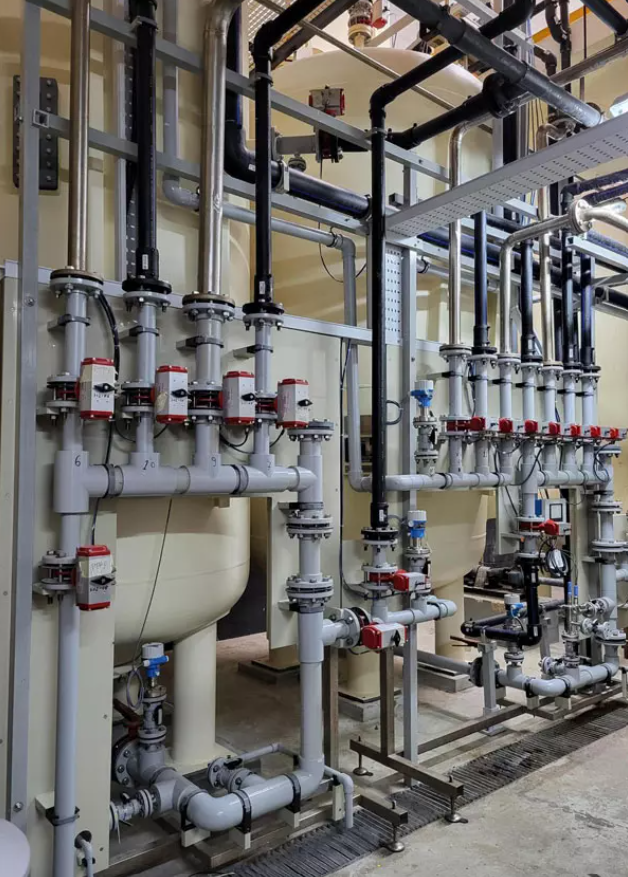
Demineralization systems can be supplied as skid-mounted or integrated process units with automated valve manifolds and PLC/SCADA control.
Online monitoring of conductivity, pH, temperature, and Brix enables automatic control of service, regeneration, rinsing, and recovery sequences while minimizing manual intervention.
The system configuration and construction materials are selected according to the feed characteristics, chemical service, operating conditions, and required product quality.
Applications
Demineralization technologies can be applied in glucose, maltose, dextrose, and fructose syrup processing, as well as polyol production, organic acid processing, fermentation, and other biochemical applications.