
Enzymatic Hydrolysis & Glucose Production Technology
Glucose syrup is a high-value sweetener widely utilized across food, beverage, and confectionery industries. It is produced through the controlled enzymatic cleavage of starch molecules into lower molecular weight carbohydrates.
Turnkey Refining & Evaporation Systems
To achieve international purity, clarity, and color stability standards, the hydrolyzed syrup passes through multi-stage filtration, activated carbon decolorization, and ion-exchange resin demineralization units.
Plant Infrastructure & Process Equipment
Our glucose syrup processing plants incorporate:
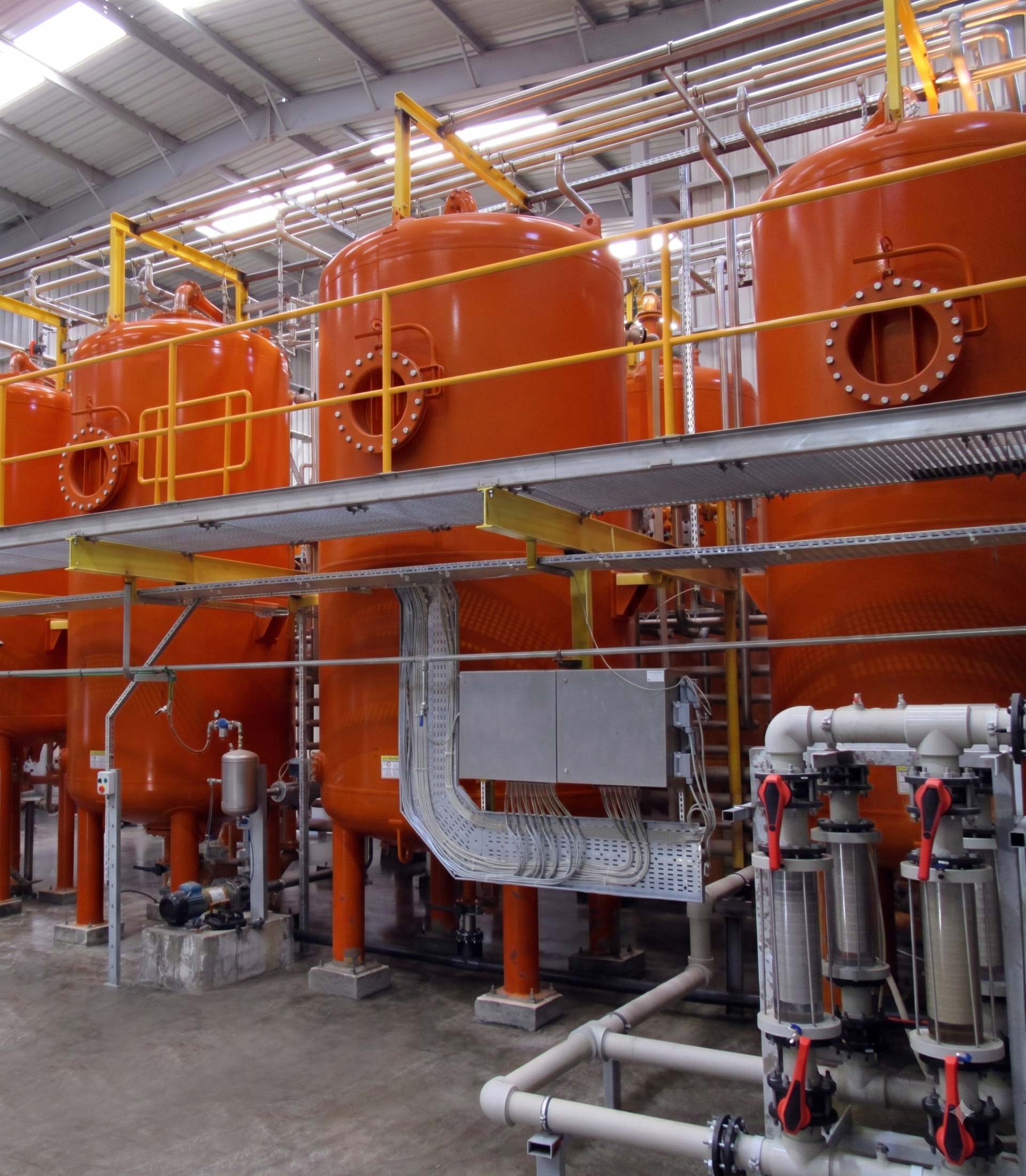
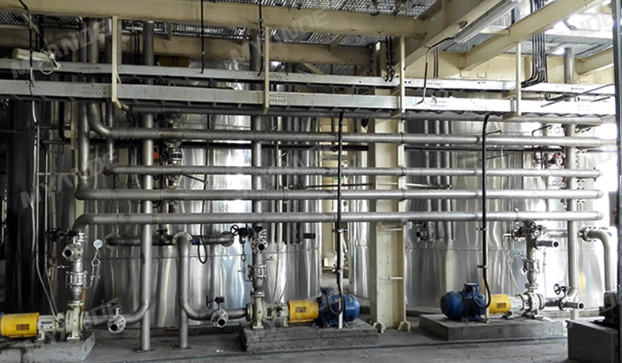
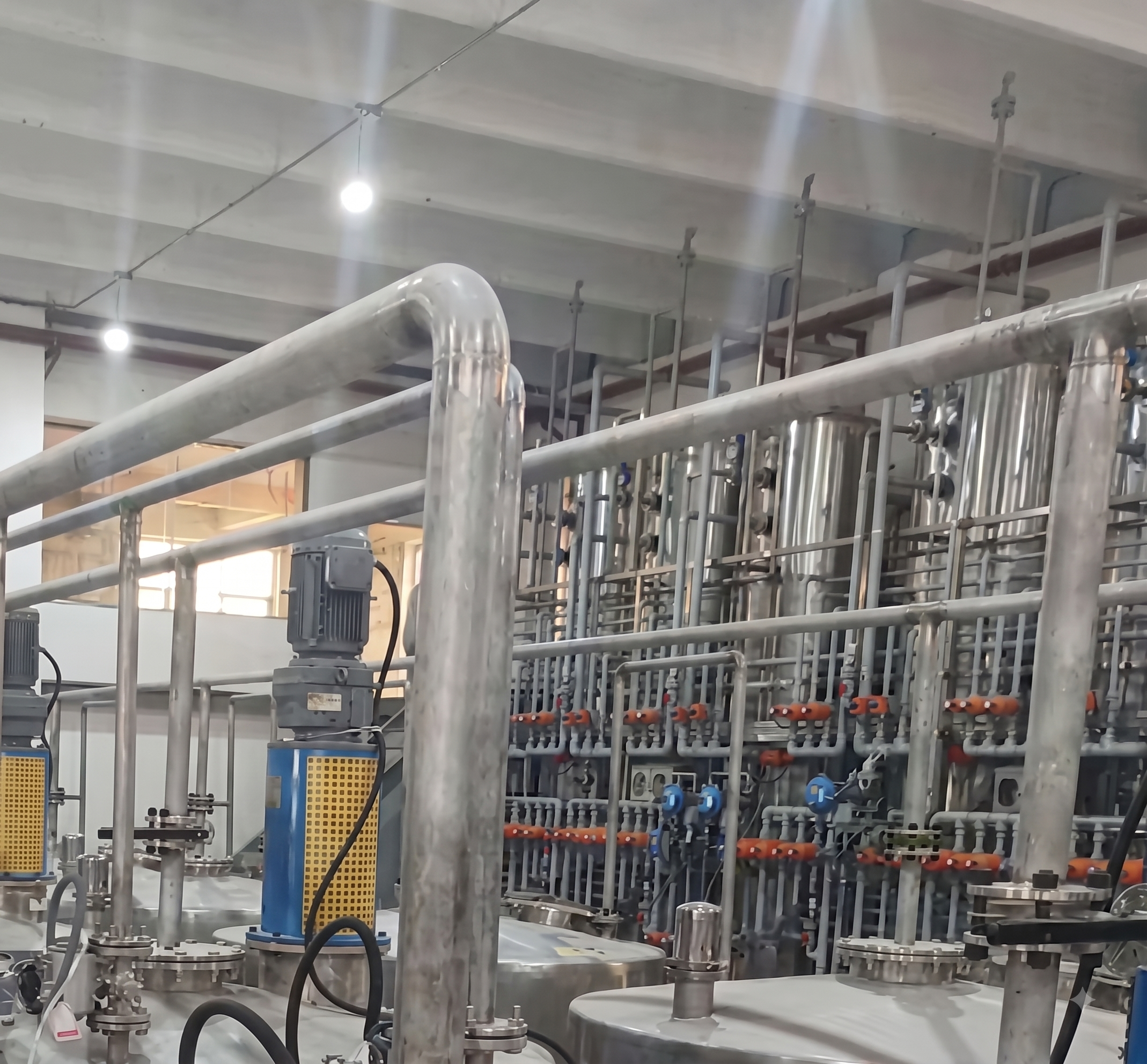
- Starch slurry dosing & enzyme dosing skids
- Continuous jet cooker liquefaction reactors
- Automated saccharification tank battery
- Activated carbon decolorization & Ion-exchange columns
- TVR / MVR multi-effect falling film evaporators
Glucose Syrup Production Flowchart
Slurry Preparation
Native starch slurry density and pH are conditioned with enzyme addition.
Jet Cooking
Rapid thermal gelatinization and liquefaction under steam pressure.
Saccharification
Enzymatic conversion into target Dextrose Equivalent (DE) values.
Filtration
Removal of insoluble proteins and carbon decolorization.
Demineralization
Ion-exchange columns remove residual ash and mineral salts.
Evaporation
Falling film evaporation concentrates syrup to final Brix specifications (75-85% DS).
Technical Specifications
| Parameter | Typical Specification |
|---|---|
| Dry Substance (Brix / DS) | 78% – 85% |
| Dextrose Equivalent (DE) | 28 – 95+ |
| Appearance | Clear, Water-White Liquid |