
Enzymatic Isomerization & Fructose Technology
High Fructose Corn Syrup (HFCS) is produced by enzymatically converting glucose into fructose using immobilized glucose isomerase technology. Through controlled enzymatic isomerization, glucose syrup can be converted into fructose-enriched syrups with defined composition and functional properties.
HFCS products offer high sweetness, excellent water solubility, and desirable processing characteristics for a wide range of food and beverage applications.
HFCS Product Variants — HFCS 42 & HFCS 55
Our turnkey plant designs can be configured for the production of major commercial HFCS grades, including HFCS 42 and HFCS 55:
HFCS 42 Direct Isomerization
HFCS 42 typically contains approximately 42% fructose on a dry-solids basis, with glucose and higher saccharides comprising the remaining solids. It is produced by passing refined glucose syrup through immobilized glucose isomerase reactor systems under controlled process conditions.
- Fructose Content: Approx. 42% on a dry-solids basis
- Sweetness: Lower than HFCS 55 and generally below sucrose on an equivalent-solids basis
- Primary Applications: Bakery products, processed foods, dairy products, canned foods, beverages, and syrups
HFCS 55 Fructose Enrichment
HFCS 55 typically contains approximately 55% fructose on a dry-solids basis. It is produced by chromatographically enriching a portion of HFCS 42 into a high-fructose stream and subsequently blending it with HFCS 42 to achieve the required final composition.
- Fructose Content: Approx. 55% on a dry-solids basis
- Sweetness: Comparable to sucrose under typical beverage application conditions
- Primary Applications: Carbonated soft drinks, fruit beverages, sports drinks, syrups, and other beverage formulations
Plant Infrastructure & Process Equipment
Our HFCS processing systems can incorporate:
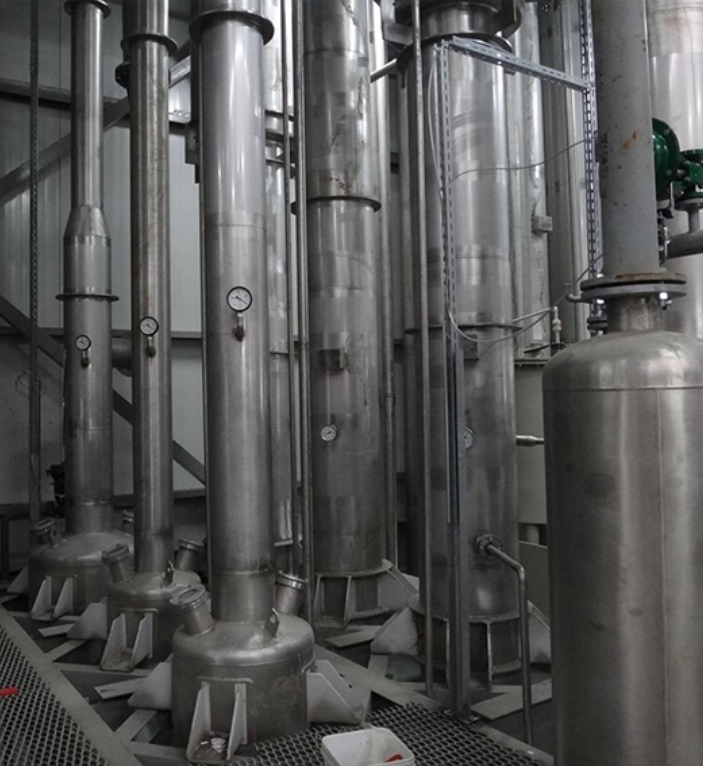
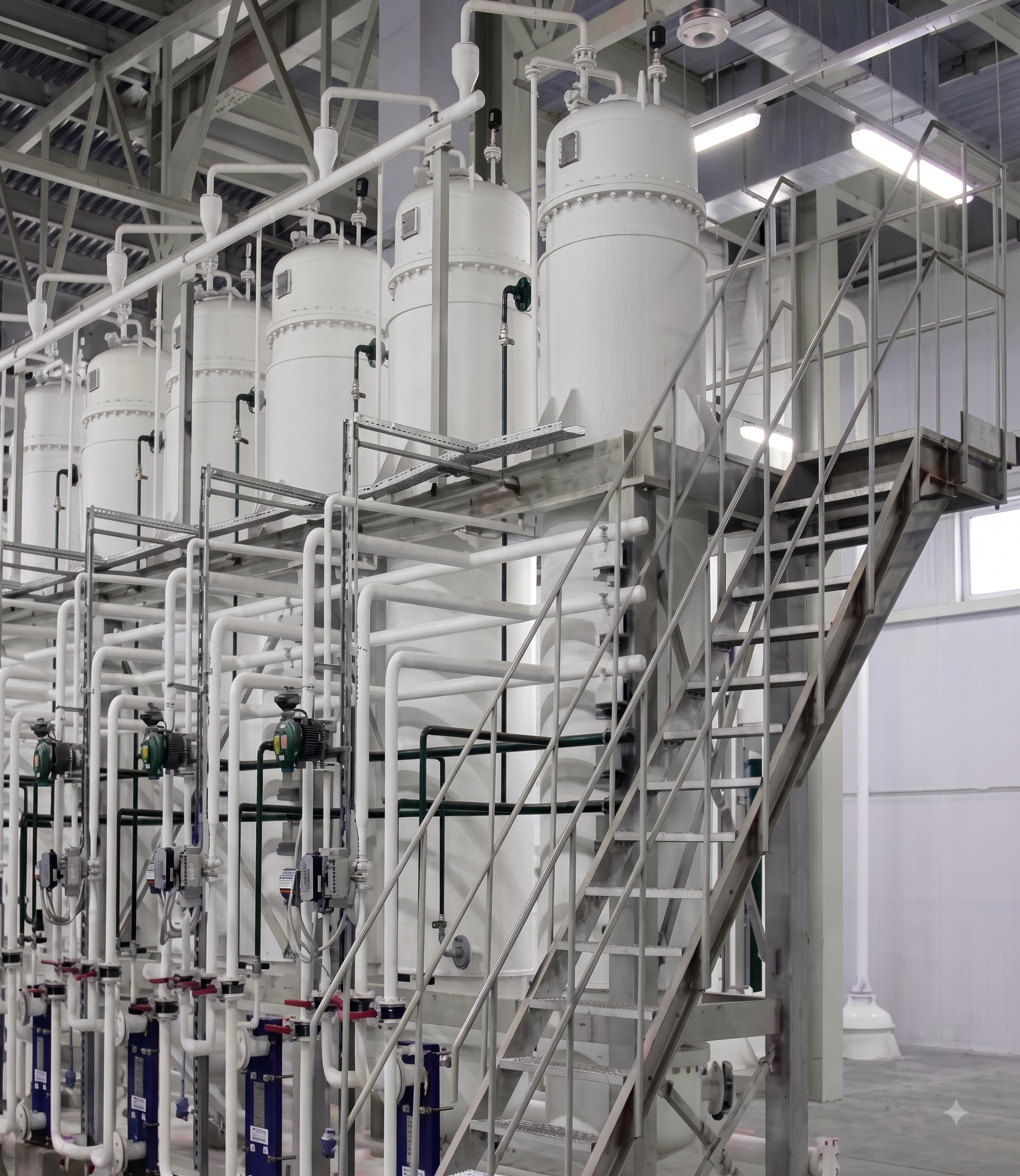
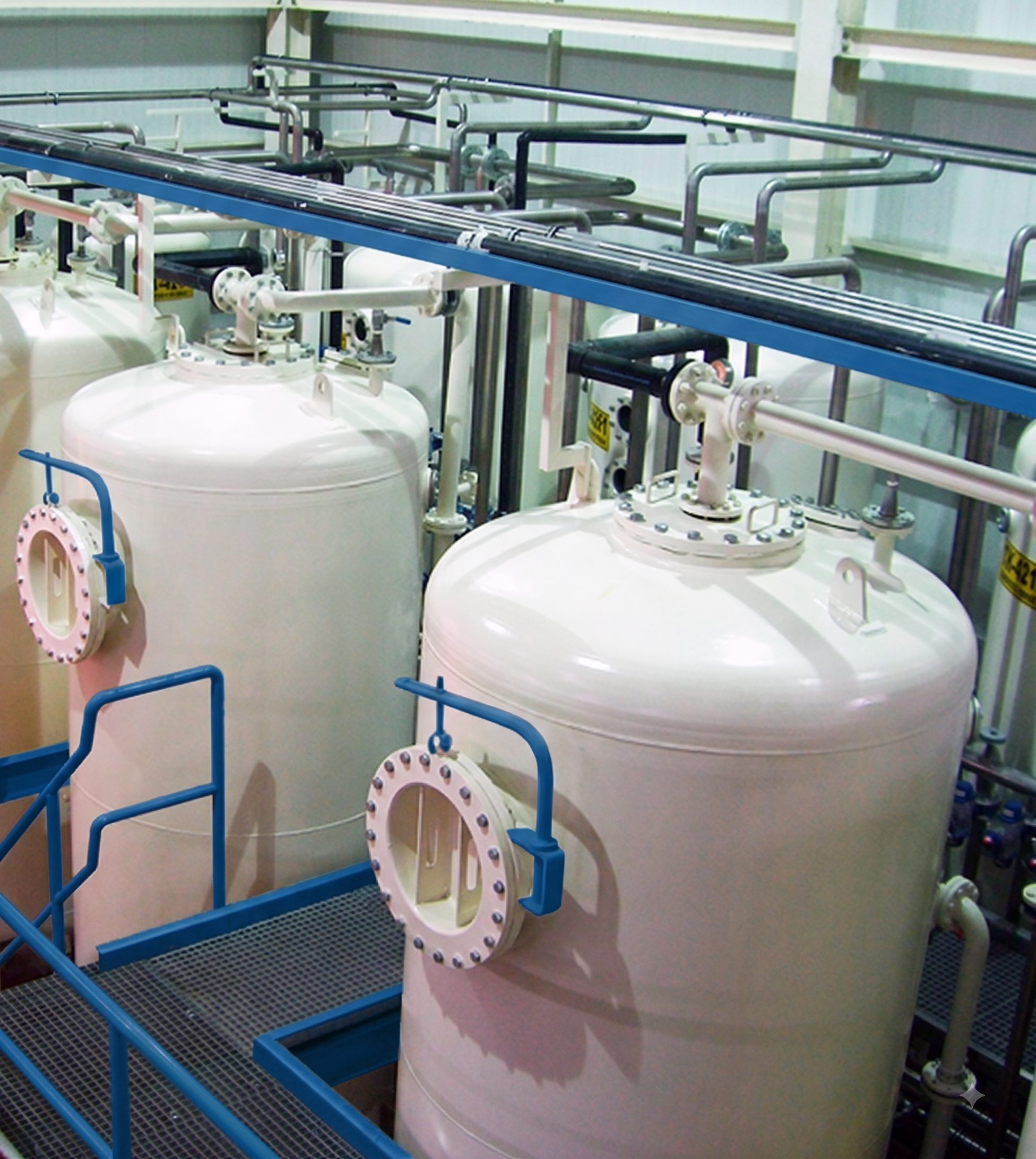
- Immobilized Glucose Isomerase Reactor Columns
- Simulated Moving Bed (SMB) Chromatographic Enrichment Systems
- Demineralization & Ion-Exchange Systems
- Activated Carbon Decolorization Systems
- Falling-Film Evaporation Systems
- Automated pH and Process-Chemical Dosing Systems
- PLC / SCADA Process Control Systems
- Temperature-Controlled Storage Tanks
HFCS Production Flowchart
The controlled conversion of refined glucose syrup into HFCS 42 and HFCS 55:
Feed Preparation
Refined glucose syrup is demineralized and conditioned to the required pH and process specifications before enzymatic isomerization. Co-factors are adjusted according to process requirements.
Enzymatic Isomerization (HFCS 42)
Conditioned glucose syrup passes through immobilized glucose isomerase reactor beds, where glucose is converted into ~42% fructose on a dry-solids basis.
Refining & Polishing
HFCS 42 syrup undergoes additional purification to reduce dissolved salts, color bodies, and impurities via ion-exchange and carbon filtration.
Fructose Enrichment
For HFCS 55 production, a portion of HFCS 42 is processed through Simulated Moving Bed (SMB) chromatographic separation to produce a fructose-enriched stream.
Precision Blending
The fructose-enriched stream is blended with HFCS 42 under controlled conditions to achieve the exact required 55% fructose concentration.
Evaporation & Storage
Finished HFCS 42 or HFCS 55 syrup is concentrated using vacuum falling-film evaporators and transferred to hygienic, temperature-controlled storage tanks.
Technical Specifications
Typical commercial specifications may vary according to customer requirements, application, and applicable standards.
| Parameter | HFCS 42 | HFCS 55 |
|---|---|---|
| Dry Substance (DS / Brix) | Typically 71–72% | Typically 77–78% |
| Fructose Content (Dry Basis) | Approx. 42% | Approx. 55% |
| Glucose Content (Dry Basis) | Approx. 52% | Approx. 41% |
| Higher Saccharides | Balance | Balance |
| Appearance | Clear, colorless to slightly yellow liquid | Clear, colorless to slightly yellow liquid |
| pH Value | Product-specific | Product-specific |
| Ash / Mineral Content | Product-specific | Product-specific |
Packaging & Storage Options
HFCS is supplied primarily in bulk liquid form and stored in hygienic, temperature-controlled systems. Storage conditions are selected according to product concentration, crystallization risk, storage duration, and customer requirements.
Available supply solutions may include:
- Insulated and Temperature-Controlled Bulk Tanker Deliveries
- IBC Containers / Totes, Where Applicable
- Temperature-Controlled Bulk Storage Tanks
- Stainless-Steel Storage and Transfer Systems