Our solutions combine membrane filtration and continuous chromatographic separation technologies to achieve efficient purification, concentration and separation with high product recovery, consistent quality and reduced production costs.
Membrane Filtration Technology
Fermentation Liquid Membrane Separation & Concentration
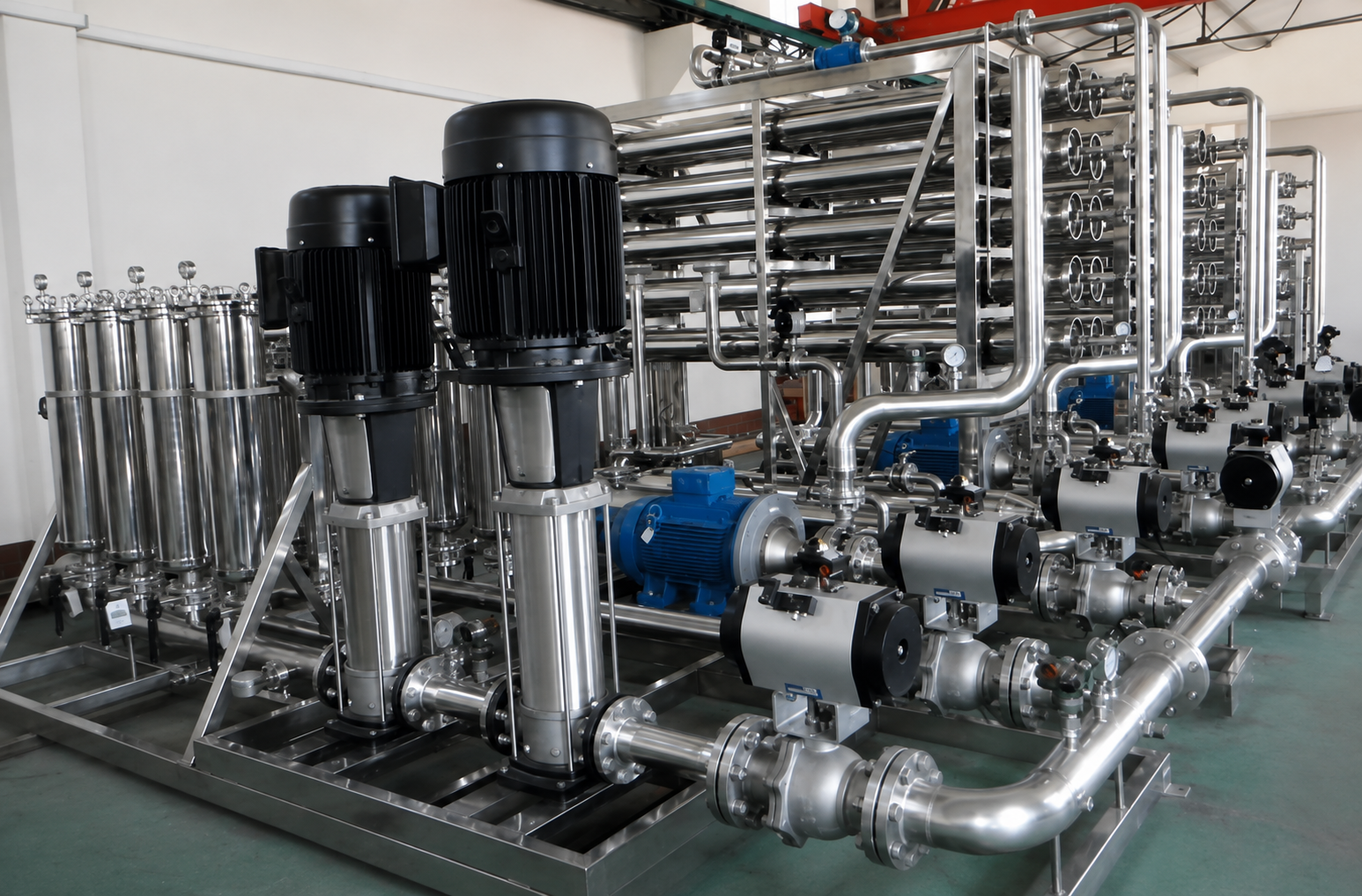
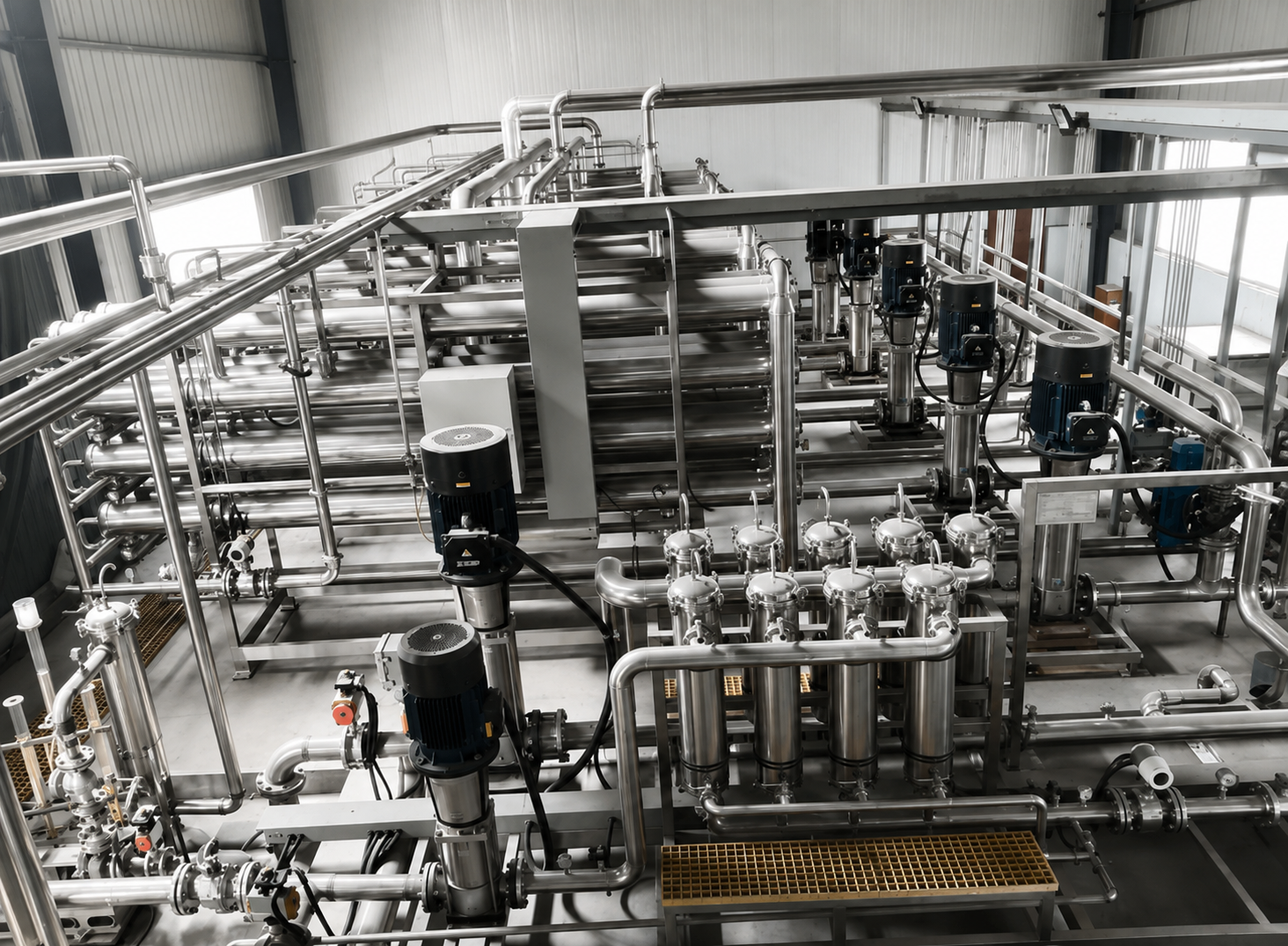
Membrane filtration technology is an efficient solution for the solid-liquid separation and concentration of fermentation broth.
Microfiltration (MF) and ultrafiltration (UF) are used to remove macromolecules such as mycelia, proteins, viruses, pyrogens and other suspended components, while smaller metabolites, salts and water can pass through the membrane.
When necessary, secondary ultrafiltration can be applied to the first permeate stream to further improve product recovery. By concentrating the target product before downstream processing, membrane filtration can reduce solvent and energy consumption while improving yield and product quality.
Advantages
- Mild operating conditions: Room-temperature operation is suitable for heat-sensitive substances.
- Pure physical filtration: No phase change or qualitative change, helping protect active components.
- High filtration accuracy: Uniform pore distribution enables effective purification and concentration.
- Simple operation: Short process flow with easy cleaning and maintenance.
- Reduced downstream load: Concentration before subsequent processing can reduce resin consumption and improve resin regeneration cycles.
- Cross-flow operation: No filter aid is required, reducing the risk of introducing new impurities and helping control fouling.
- Modular design: Convenient membrane replacement with online regeneration and cleaning systems.
- Automatic PLC control: Reduces labor intensity and supports stable process operation.
- Compact footprint: Large membrane filling area with a small installation footprint and easy capacity expansion.
Glucose Membrane Separation Technology
Microfiltration or ultrafiltration can be used for the solid-liquid separation of glucose-containing process streams.
The membrane removes unwanted macromolecular components while allowing glucose to pass through. The glucose content in the permeate can reach approximately 99.5%, depending on process conditions.
The membrane filtration solution can be used for VC-grade sorbitol production, while the residual solution can be utilized for food-grade and daily chemical-grade sorbitol production. This technology can improve product quality while reducing or eliminating the conventional glucose crystallization step, helping simplify the process and reduce production costs.
Key Benefits
- Mild operating conditions
- Pure physical filtration
- High filtration accuracy
- Effective glucose purification
- Short and simplified process
- Cross-flow operation
- Modular system design
- Automatic PLC control
- Compact installation footprint
- Reduced investment and production costs
Chromatographic Separation Technology
Continuous Chromatographic Separation
Chromatographic separation technology is a highly efficient method for the purification and separation of components in homogeneous mixtures. Our chromatographic technology is based on Ion Exchange Chromatography and Sequential Simulated Moving Bed (SSMB) technology.
Different substances have different partition coefficients between the stationary and mobile phases. As a result, they have different retention times during the elution process and can be separated according to their relative movement through the chromatographic resin.
Components can be classified into fast-moving and slow-moving groups, enabling efficient two-component separation and purification. This technology is widely used in the starch sugar and fermentation industries.
Chromatographic Column Configurations
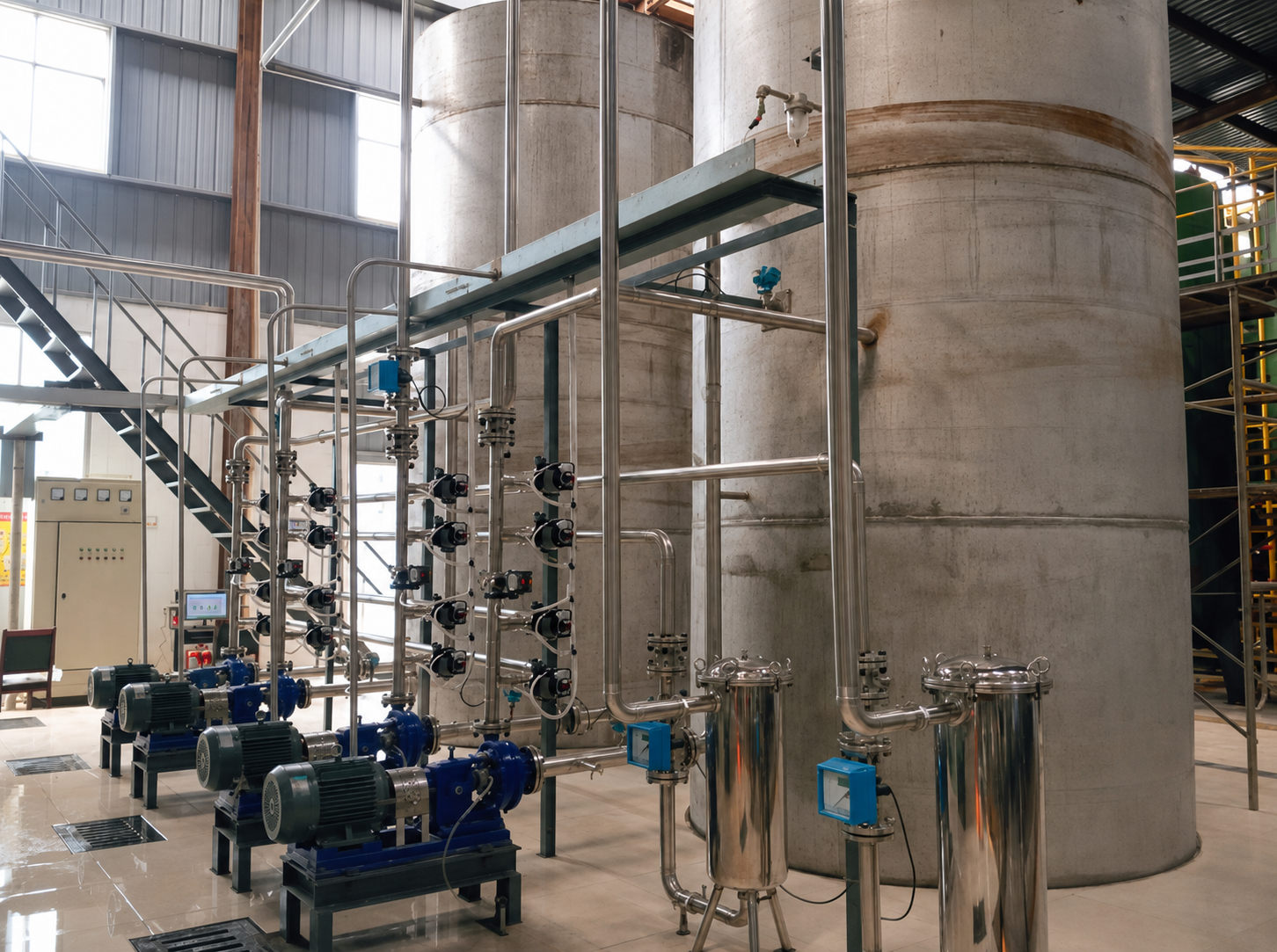
Six-Column Mode: The six-column configuration consists of six chromatography columns and six circulating pumps. The longer total column length provides a longer separation stroke, allowing components to be more completely separated. This configuration is particularly suitable for difficult separations and applications requiring higher separation purity.
Six-Column / Four-Column Mixing Mode: The system can also operate in a flexible six-column/four-column configuration. During periods of high production demand, the six-column mode can be used to increase production capacity. During lower-demand periods, the four-column mode can be selected to save energy and reduce consumption.
Advantages of Chromatographic Separation
- Advanced SSMB technology for improved system efficiency and performance
- High separation efficiency through optimized chromatographic operation
- Optimized distributor design to minimize back-mixing
- Stable system operation with user-friendly control parameters
- Flexible production capacity through different column configurations
- High product purity and recovery
- Reduced water and energy consumption
- Efficient resin utilization
- Scalable system design
- Cost-effective separation technology
Applications
Filtration and chromatographic separation technologies can be applied across a wide range of starch sugar and fermentation industries, providing reliable solutions for solid-liquid separation, purification, concentration and high-efficiency component separation including Glucose, Maltose, Crystalline Glucose, Fructose, Crystalline Fructose, F42, F55, Sorbitol, Mannitol, Maltitol, Citric Acid, L-Lysine, and Lactic Acid.